Blog Post #7: The Peak End Rule: How to Use a Cognitive Bias to Our Advantage
The peak-end rule is a concept in behavioral economics which states that humans usually always remember the most intense, best parts of each moment. A common example of this is going to a very crowded amusement park. You wait in line for an hour just for a 30-second ride, yet when you come home, you think you had such a great time because you remember that exhilarating feeling on the roller coaster, and realize the hour-long wait was worth it.
An article by author Nir Eyal titled, “Peak-End Rule: Why You Make Terrible Life Choices” explains how this rule works. “Evolutionarily, it makes sense for us to only keep the memories that most aided our survival. Remembering the most painful and pleasurable moments helped us avoid them or seek them out in the future.”
Another interesting example can be seen in the differing experiences of two patients, as examined in a classic experiment by Donald A. Redelmeier and Daniel Kahneman. One patient’s procedure took 15 minutes, but ended with the most painful part of the procedure. The second patient’s procedure took one hour, and they experienced much greater pain intensity than the first patient, but this pain occurred in the middle of the procedure. The second patient ended their procedure with barely any pain intensity at all. Afterward, the second patient actually recalled their procedure to be less painful, simply because they ended with lower pain intensity.
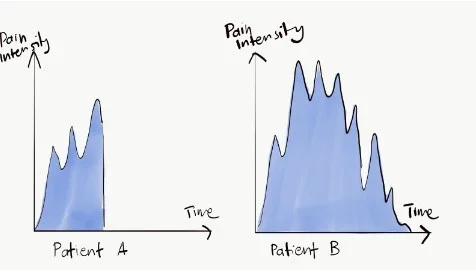
The “peak-end rule” denotes an intrinsic cognitive bias that all humans have, and according to The Decision Lab, it’s “a psychological heuristic that changes the way we recall past events.” We can use this peak-end rule to our advantage by doing little things every day that make us happy. It doesn’t have to be something huge, but finding little peaks everyday can significantly boost our mood. Furthermore, ending your exercise with low intensity has been proven to increase the chances that you enjoy your session more and come back consistently to do it. The more peaks that we can undergo, the greater the likelihood that we’ll remember the experience.
Furthermore, an article from The Decision Lab titled, “How do our memories differ from our experiences?” describes how the peak-end rule is also commonly used by companies to create better customer experiences and increase their sales. Brands often work to maximize peak customer experience, which ensures a positive conclusion, making them more inclined to come back a second time. Something like providing a discount at the checkout or handing out small departure gifts can leave customers excited from their experience with the store. This will likely draw customers back.
However, the peak-end rule can also be a dangerous cognitive bias that traps lots of people into always remembering the most negative parts of experiences and missing the small moments that actually makes them happy. Ultimately, it’s worth remembering that it’s very easy to always focus on the negative aspects, which is why changing your perspective is so important.